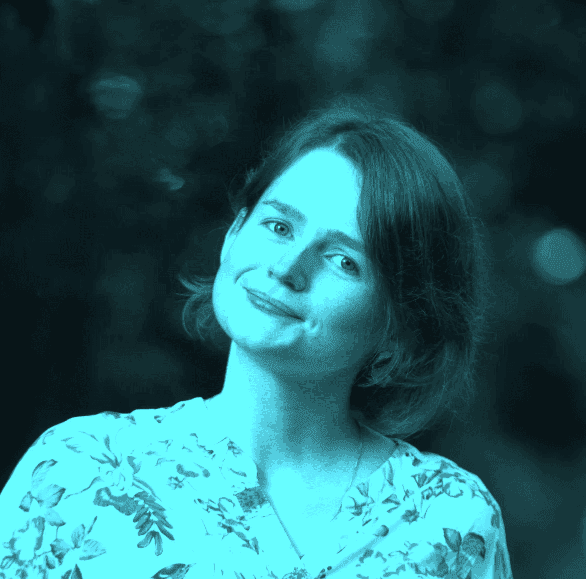
Elizaveta Makarova
•
Well, perhaps touching the existential givens of one's own existence is quite an adventure, yet it is one worth embarking upon for the sake of feeling the fullness and meaning of life. And taking this step is no longer so frightening when there is someone beside you walking a similar path—be it a therapist, a friend, or a teacher.
What challenges I work with
Existential questions (the fear of choice and responsibility, suffering from loneliness, the fear of death and/or the experience of encountering it, the loss of a loved one, losing the meaning of life, searching for oneself, etc.);
Anxiety, shame, guilt, uncontrollable aggression, and other overwhelming feelings and states;
Self-hatred and body rejection, self-harm, and suicidal behavior;
Traumatic (early or recent) experiences;
Difficulties in building relationships (romantic, family, friendly, and others);
Existential, age-related crises, and identity crises;
Psychosomatic manifestations and symptoms;
Questions of sexuality;
“Strange,” “taboo” interests and hobbies not shared by society;
Pain and worry related to a loved one who has gone missing;
Confusion (absence of a clear request, not understanding what is troubling you);
Challenges related to the unique aspects of adolescence (self-determination, bullying, youth apathy, etc.)
Biography
Even as a teenager, after reading first "An Introduction to Psychiatry and Psychoanalysis for the Uninitiated" by E. Berne and then "The Interpretation of Dreams" by S. Freud, I was captivated by the sheer depth with which one can approach the human psyche. These encounters, along with the difficult experiences of those years, laid the foundation for my desire to become a practicing psychologist—to help others not only find themselves, but also learn to live peacefully with who they are. In 2015, I graduated from school with a gold medal, and in 2019, I completed my bachelor's degree at Moscow State Pedagogical University with honors (specializing in Psycho-Pedagogical Education).
For several years, I worked in a Moscow school as an educational psychologist, while simultaneously pursuing my master's degree at the Moscow Institute of Psychoanalysis (specializing in Applied Psychoanalysis and Psychoanalytic Counseling) and undergoing psychoanalytic retraining at the Humanitarian University in Ekaterinburg. Having experienced the state system firsthand, I realized that I could bring much more value outside of its boundaries. Thus, I transitioned into private practice in 2019, where I continue to work today. Since 2020, I have been running a blog called freid_off, where I share reviews of psychological literature.
For a long time, it was psychoanalytic education that remained central and most desirable for me. I underwent personal therapy and supervision within this framework, at times in a fairly orthodox form. My acquaintance with the existential paradigm began with the books of I. Yalom, followed by Kociunas and Längle, reaching a key crossroads when I read "Existential Analysis" by L. Binswanger. This encounter with Daseinanalysis led to a separation in my professional identity into a psychoanalytic therapist and an existential psychologist, a follower of the phenomenological approach. Since then, I have completed numerous courses taught by educators such as A. Längle, N. Artemenko, A. Lyzlov, N. Prikhodko, and others.
After graduating in 2025 from the relational psychoanalysis program at the International Academy of Psychodynamic Psychotherapy, I continue to study and popularize this approach, as well as lead educational projects, lectures, and reading groups dedicated to the study of Daseinanalysis.
What unites intersubjective psychoanalysis and Daseinanalysis is the focus on the Encounter of two subjectivities, on relationships, or, even more accurately, on the phenomenon of intersubjectivity as something larger than just two separate individuals interacting with one another. Our entire lives, and in essence, all our suffering, are bound up with relationships—with the fact that we exist with someone (or without someone). It is precisely through the experience of new relationships that a deeper understanding of oneself becomes possible. To my mind, the existential paradigm brings us face to face with incredibly difficult themes that we might wish to avoid, but this confrontation brings freedom and softens our fear of an unknown, misunderstood, and unpredictable world. In the end, it truly seems worth it.
Accreditations and Memberships
Alliance of Existential Counseling and Care (ECCA)
Independent Relational Group
Professional Education
Higher Education and Retraining:
Bachelor's Degree, Psycho-Pedagogical Education, Moscow State Pedagogical University, 2015-2019
Master's Degree in Applied Psychoanalysis and Psychoanalytic Counseling, Moscow Institute of Psychoanalysis, 2019-2022
Professional Retraining in Psychoanalytic Counseling, Humanitarian University, Ekaterinburg, 2020-2021
International Training Program with American Psychoanalysts "Psychoanalytic Psychotherapy: A Relational Perspective", International Academy of Psychodynamic Psychotherapy, 2023-2025
Psychotherapy and Counseling
"Psychological Work with Anxiety: An Existential-Analytical Approach (Program Director Alfried Längle)", ChOU DPO "Resource Institute of Social Practice", 2019
"Contemporary Clinical Psychoanalysis", OOO "Institute of Contemporary Psychotherapy and Psychology", 2020
"Therapy of Personality and Sexual Disorders", OOO "Institute of Contemporary Psychotherapy and Psychology", 2021
"Psychiatry for Psychologists", OOO "Institute of Contemporary Psychotherapy and Psychology", 2021
"Phenomenology. Intersubjectivity", OOO "Institute of Philosophy and Psychology 'Man and the World'", 2022
"Psychology and Psychoanalysis of Old Age", OOO Research Center of the East European Institute of Psychoanalysis, 2023
"Theory and Practice of Daseinanalysis", a course by A. Lyzlov, 2023
"The Turn of Being. Heidegger's Ontology", OOO "Institute of Philosophy and Psychology 'Man and the World'", 2023
"Existential Psychology and Philosophy", OOO "Institute of Philosophy and Psychology 'Man and the World'", 2023
"Psychological Support for Grief and Loss", ANO "Center for Additional Professional Education in the Field of Psychology 'Metaphor'", 2023
"Introduction to Existentialism", a course by A. Avdeenkov, 2023
"Existential Psychotherapy: Genesis, Tools, Techniques", a course by N. Prikhodko, 2025
"Oncopsychology: Providing Psychological Support to Cancer Patients and Their Loved Ones", Pirogov Russian National Research Medical University (Pirogov University), 2025
"Ontological Psychoanalysis: From Knowing to Being and Becoming" (course by Jack Foehl), International Academy of Psychodynamic Psychotherapy, 2026
Key Principles of My Approach
Respect and acceptance. Every person is unique, and each individuality is precious. I respect who you are, regardless of your orientation, your religion, or your political views;
Phenomenological lens. Despite a wide background of psychological knowledge, I do not view people through categories, diagnoses, levels of functioning, or specific theories. Each personal story and unique experience is one of a kind, and it can only be understood in alliance with the person, sharing their special language of experiencing the world;
Neutrality with deep interest. I am not an all-knowing expert who will tell you exactly where to go to find relief. Rather, my role can be described as an interested companion and fellow traveler, sharing a part of the client's journey, wherever the path may lead. I offer my soul, heart, and knowledge, but the choices and responsibility belong to you as well;
Relationships as a vital dimension of our work. In an existential sense, we are always about relationships, so this theme is essential in therapy, touching both daily life and the way interaction unfolds in the room between client and therapist;
Openness and readiness for "difficult" topics. A large part of my practical and academic work is dedicated to exploring sensitive and complex themes, such as death, violence (including the urge toward it), paraphilias, despair, and loneliness, and I have no barriers to discussing them;
Integrative approach. I strive to utilize various psychotherapeutic directions and tools that can help in each specific case, refusing to limit myself to a single approach.
Current Groups, Courses, and Projects
Reading group exploring the book "Suffering from One's Own Being" by Alice Holzhey-Kunz
Balint relational groups for specialists across various modalities
Languages
Russian
Format
Online, In-person in Moscow