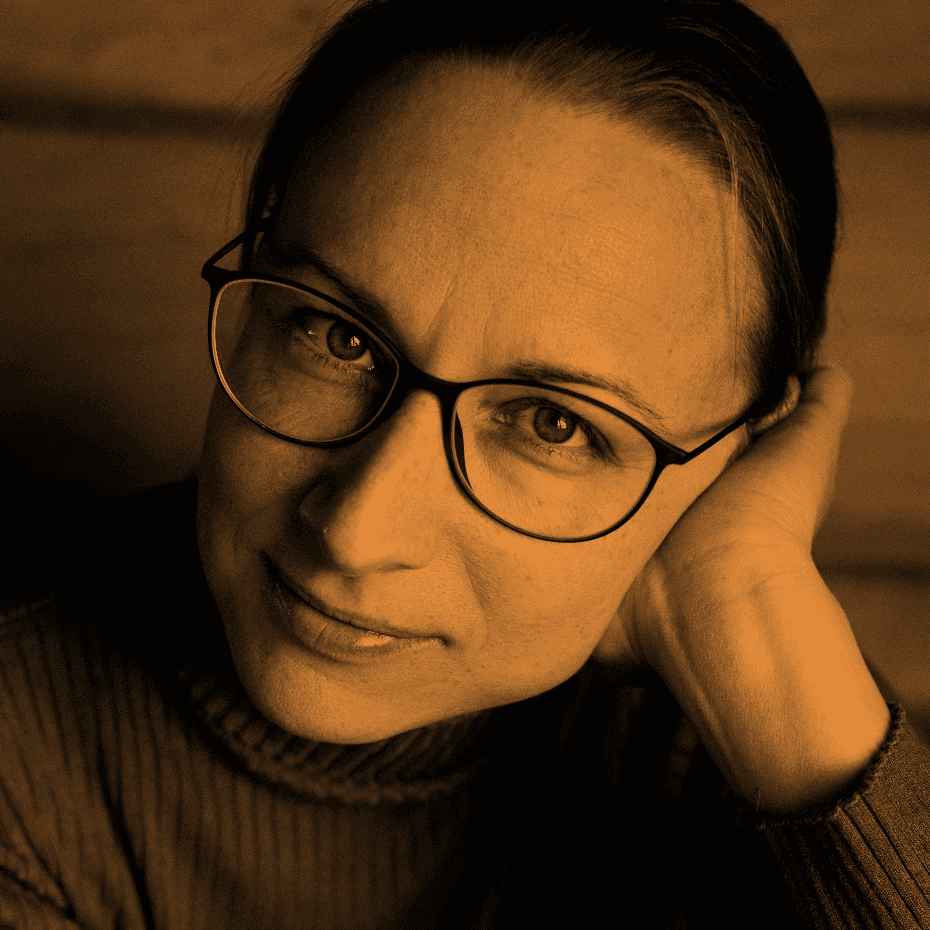
Sasha Tunko
•
There is a field beyond ideas of right and wrong. I will meet you there.
Issues I work with
Life crises
Loss of meaning and meaninglessness
The struggle of making choices
Conflicts with oneself and others
Identity crisis
Loneliness and isolation
Support through postpartum depression and the challenges of motherhood
Loss and grief
Processing betrayal
Disrupted relationship with one's body
Biography
My professional mantra is expressed in the words of Jalal ad-Din Rumi: “Out beyond ideas of wrongdoing and rightdoing, there is a field. I'll meet you there.” As a specialist, it is vital for me to remain open to my client's way of being, to see and embrace their unique difference, rather than attempting to steer them toward an alternative way of living in the world that might feel more familiar to me. Such an approach demands constant connection not only with the feelings of another but also with my own—requiring observation, reflection, and knowing when to gently step back when the urge to "cure" the person in therapy arises.
My path into the world of therapeutic relationships was not a straight line. I began my professional life as a writer, creator of an online publication for young women, and organizer of documentary and arthouse film festivals. In all these art projects, my attention was always drawn to how a human being lives, what happens to them when they face various life events, and what choices they ultimately make. To explore and describe is what I have always done and continue to do. This genuine interest in the process of living and in continuous change brought me to yoga 17 years ago, and in 2017, it led me to India, and later to Costa Rica, where I trained to become a yoga and meditation teacher. The time we spend practicing, in my view, is inseparable from the time we spend off the mat. How one behaves on the mat reveals how they live when they leave it. The practice becomes a space to explore states and sensations, an opportunity to inhabit one's own body and, ultimately, to reclaim it. Regular meditation helps us learn to observe and stay mindful of what is happening within us, remaining present in the lived experience as much as possible. As a psychologist, I believe there is no division between the human mind, body, and feelings; they are woven together in the wholeness of experience, which is why I pay special attention to the client's bodily responses in my work.
An important place in my professional activity is dedicated to exploring the experience of womanhood. In 2016, I began hosting “Women’s Conversations,” which became a space for dialogue and shared experiences. In 2019, alongside leading practices, secular meditation seminars, and retreats, I began working in an international team focused on organizing and hosting: a festival of gender literacy, freedom of choice, and human dignity; research on women’s economic security; and supporting organizations that assist survivors of domestic and sexual violence. That same year, I connected with like-minded women in Irkutsk, with whom we organized two women’s conferences aimed at shedding light on diverse life experiences and de-stigmatizing women living with somatic and mental illnesses. At the heart of all this work lies the very same professional mantra, reminding us of the other person’s right to choose for themselves how to exist in this world, carrying their own awareness and responsibility.
In 2020, I began psychological counseling, which gradually became my primary focus. It is difficult to pinpoint the exact moment when existential practice became the center of my interest. But in 2022, I began my training in the “Existential Psychotherapy and Counseling” program, during which it became clear that I simply had no choice but to be an existential therapist. I am driven by a desire to explore alongside the client how they live, how they face the dilemmas of life, and their relationships with others, while honoring uncertainty, process, interconnectedness, and non-linearity. Describing the “how” allows us to see and understand the pattern of a person’s interaction with the world, their existing limitations, and, as a result, to discover the possibilities that lie ahead. This view of the therapeutic process is not for everyone, which is why I believe it is necessary to regularly clarify with the client what expectations they have of our relationship, where we are going, and when it might be time to part ways. As a therapist, I pay special attention to my own capacity to remain open to personal change when meeting another. Keeping one's heart open means it is impossible to remain unchanged, and this implies a willingness not just to stand by a person, but to grow alongside them. Otherwise, there is a risk of slipping into the position of an expert or a mentor.
Accreditations and Memberships
Alliance for Existential Counselling and Care (ECCA)
Professional Education
Baikal State University of Economics and Law, Marketing Specialist, 2010
Jivamukti Yoga Immersion, India, 2017
Jivamukti Yoga Teacher Training Program, Costa Rica, yoga and meditation teacher, 2017
Jivamukti Yoga Immersion, Barcelona, 2018
Mindfulness education, somatic mindfulness practice, 2021
Mindfulness education, international certification confirmation, mindfulness teacher, 2022
Buddhist Meditation, Theravada Tradition, theory and practice, 2023
Buddhist Meditation, Mahayana Tradition, theory and practice, 2023
Psychology and Psychotherapy
Irkutsk State University, Psychologist, 2020
Existential Psychotherapy and Counseling, N.P. Bekhtereva Training Center, 2023
The Therapeutic Relationship, N.P. Bekhtereva Training Center, 2023
Secrets of Psychiatry: Clinical and Psychiatric Competency for Psychologists, attendee, N.P. Bekhtereva Training Center, 2023
Irkutsk State University, Body-Oriented Therapy, basic course, 2024
Practical Existential Therapy, 2025
Core Principles of My Approach
Openness
To describe is to change
Attunement to the client who is present
Listening aimed at clarifying what is happening in the client's inner experience and how it unfolds
Readiness for personal change
The client knows best what they need
The encounter is more important than the technique
The past can never fully explain the present; reality is such that we will never find a single, concrete cause that birthed the current situation
Respect for the client's right to end therapy at any moment.
Current Groups, Courses, and Projects
Women’s therapeutic groups
Collaborative group research project on experience: “Motherhood. Existential Experience Group”
Book club gatherings: “In Her Own Words”
Project LIFE IS PRACTICE
Languages
Russian
Format of Work
Online
Online